This post is the first in a series in which I attempt to build experiments from Charles Platt’s excellent introductory electronics book Make: Electronics.
You can find an index of all the posts in this series here: Electronics Index.
The first experiment in the book is ominously called “The Taste of Power” and suggests that finding out what electricity tastes like might be a fun idea! Well why not? I’m game. So I got hold of a brand new 9V battery. To demonstrate I wasn’t cheating, I tested the battery with both a battery checker and the multimeter, which gave me a healthy reading of 9.68 volts.
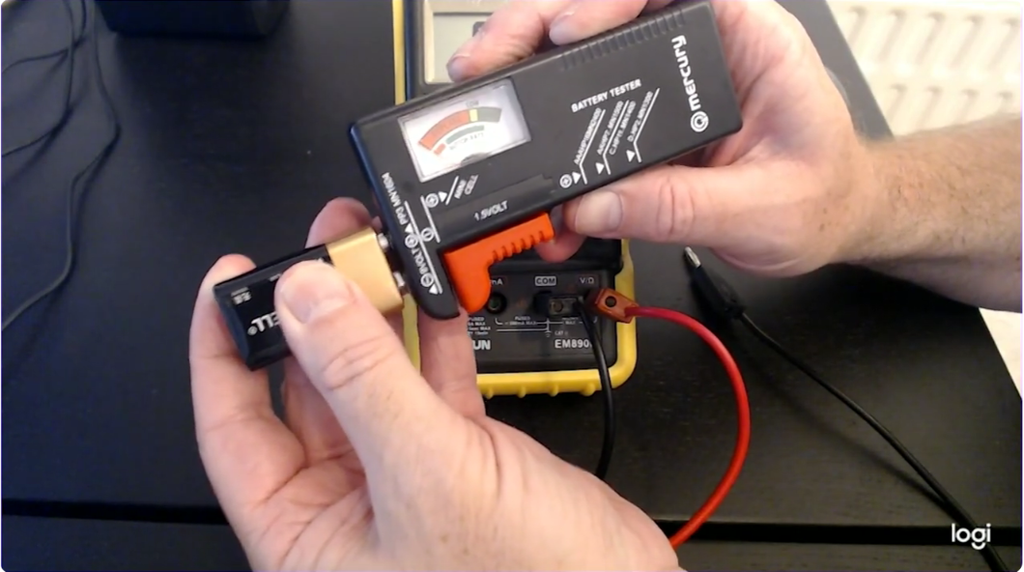
Having satisfied myself that the battery was good to go, I took a mouthful of tap water to get my tongue properly moist and applied the battery to the end of my tongue.
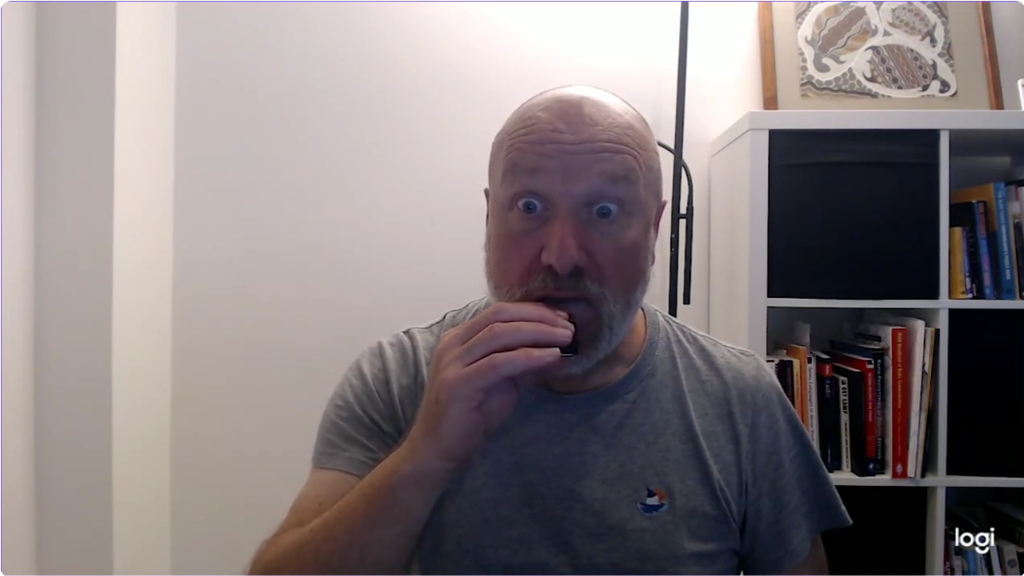
It was not a pleasant experience – like eating popping candy without the sweet flavour! The book suggests trying it with various moisture levels on the tongue and here were my findings:
Moisture Level | Method | Outcome |
Dry tongue | Dry tongue with a paper towel | Strong tingling sensation |
Moist tongue | Wet tongue with tap water | Mildly stronger tingling sensation |
Moist and salty tongue | Lap salt water before testing | Sharp and unpleasant shock |
Should you choose to repeat such an experiement, please note that combining your moist tongue with anything more powerful than a 9V battery, such as a car battery, a power pack from an appliance, a power adapter or the mains is likely to result in you having a very bad day, so please don’t.
So, given that the flow of electricity is dependent on the resistance of the medium, I decided to measure the resistance of my tongue under the same three conditions, and this is what I got:
Moisture level | Method | Average resistance |
Dry tongue | Dry tongue with a paper towel | 291 Kilohms |
Moist tongue | Wet tongue with tap water | 265 Kilohms |
Moist and salty tongue | Lap salt water before testing | 220 Kilohms |
In the next post in this series, I destroy an LED!
[…] Make: Electronics Book Experiment 1 – The taste of electricity! […]